Monday, May 31, 2021

Winding Down This Most Peculiar Year

My best intentions for keeping a schedule of posting have come to naught under the weight of other digital responsibilities. That is not to say however that we have been idle in the STEM Lab. Quite the contrary, we have been designing, programming, and building up a storm. 

So here is the short version of what the various grade levels have been up to these last couple of months. 

Kindergarten & 1st grade

We spent several weeks exploring the nature to be found on campus. Students used their senses (not taste) to make and record observations about the living and non-living natural things they saw. We walked around campus noting the different types of trees, the birds, and even visited the habitat to see the pond. One of the most exciting things was getting to monitor the progress of a robin nest in a crepe myrtle outside one of the kindergarten classrooms. We made leaf rubbings and created pictures using natural materials as well.


The next unit was a return to computer programming. However, the focus this time was on creative computing rather than solving puzzles as we do in Code.org. We used the language Scratch Jr. for its ease of use. Each class began with a guided lesson followed by an independent practice challenge. Once students had completed the challenge they were invited to create their own programs with self designed characters and backgrounds. One of my main goals for the lab is that students see computer programming as a tool for self expression and sharing their learning. I start teaching them that lesson early and I am endlessly impressed with their creativity.


2nd grade

One of my favorite things to do with my second graders is to introduce them the "real" Scratch. Most of them have been using Scratch Jr. since kindergarten and stepping up to the full version make them feel like they are now the big kids. This was a 2 part unit (on account of the fact that I only have one week with the class rather than two. The first week was guided practice using the various commands and relating them to the Scratch Jr platform that they are familiar with. The second week involved planning and then programming an "All About Me" project in which clicking each letter of their name shared something about them.


Second grade's final unit of the year is, like their introduction to Scratch, about preparing for next year's STEM Lab projects. This one aims to develop the students' cardboard engineering skills. In the lab, our primary building material is cardboard. It is plentiful, easy to work with, and sturdy enough to build large structures. The students practiced constructing models using L-braces, flanges, and slotted pieces before combining these methods into a stabile. I have discovered that most students do not know how to effectively use liquid glue, so that is another one of the goals of this unit.


3rd Grade

The third graders also experienced a 2 part unit, this one involving the BBC Micro:bit device. This is a microcontroller that students program using a block-based language called MakeCode. The first week was spent becoming familiar with the various inputs and outputs found in the Micro:bit. The primary inputs students learned to use are buttons, the accelerometer (tilt sensor), and the I/O pins. They used these inputs to trigger outputs to the 5x5 LED screen and sound effects played through an add-on speaker board. The next time they visited the lab, students built a model animal with cardboard and construction paper and incorporated a Micro:bit running a program of their own creation to make their animal interactive.


The last 3rd grade STEM Lab unit was an introduction to the concept of "broadcasts" in Scratch. A broadcast sends messages between different elements of a program allowing the students to coordinate their these elements to create projects of greater complexity. Here are a couple examples.


4th grade

Our 4th graders spent a few extra units on Scratch this year. We were involved in piloting lessons and activities put together by the Creative Computing Lab at the Harvard Graduate School of Education. These projects seek to develop students' coding skills while also developing their creative confidence. One of my overarching goals in the lab has always been to make students comfortable with open-ended tasks with many possible solutions. The general emphasis on standardized test results tends education toward standardized answers. Students display this training by point at whatever they are working on and asking, "Like this?".  A collection of the projects they created for these units can be found here: When Clicked, Broadcasts, Ask & Answer

After so much computer programming we took a break to do some purely physical making. This was the "biography bottles" research project. Students researched an important figure from the sciences. They then built a model of that person with plastic bottles, cardboard, and construction paper. They completed their display with a timeline of significant dates in that person's life and a notecard detailing their contributions and accomplishments.


The 4th grade is finishing the year setting up a project for next year when they are in 5th grade. My wife is also an elementary STEM lab teacher (at another school of course) and in 2020 we were awarded a summer study grant from Fund for Teachers, an organization that funds self designed professional development experiences for teachers. Our grant will help us visit the Galapagos Islands to create a model GeoInquiry project based on the framework created by National Geographic. This type of project engages students in geographic thinking and encourages them to take action to improve their communities. Students have been researching things to see and study in the Galapagos and will begin writing questions for us to ask the naturalists and guides we meet with on our expedition.

5th grade

My 5th grade students are often "asked" to be a beta testing group for new STEM lab units and this year is no different. Related to the aforementioned GeoInquiry project related to the Galapagos, I want to include GIS mapping next year when we review the data related to our expedition. Never having used this kind of technology with students, I wanted a test drive. I find 5th graders to be brutally honest about what works and what does not when given the chance (and when they trust the teacher enough to be honest with them). We worked with a number of resources including surveys and map explorations. I am extremely grateful for the feedback the students provided. Another part of this unit was a set of Skype-a-Scientist meetings. They facilitate connections between scientists in a variety of fields and classroom teachers. 


The 5th grade finished the year with a couple units based on art. In the first they used their skills in Scratch to "hack" a famous work of art. The result is a painting that one can interact with by clicking the different parts. Here are a couple examples: 


The other art-meets-programming project used Turtle Art, a language based on Logo that allowed students to draw with code. This drew (haha) not just on their knowledge of coding, but on their geometry skills as well. I was quite impressed with the things they were able to make.

So there you have it, everything we have been up to the last few months. It is certainly been a strange and taxing roller coaster of a year and I certainly hope that the 2021-2022 school year will be a bit more normal. 

Check here for updates on the Galapagos expedition.

Have a wonderful summer!

Thursday, April 8, 2021

Papercraft with Kindergarten and First Grade


 The Kindergarten and first grade classes have spent their last trip through the STEM Lab working on some creative paper crafting. Most of the week was spent creating basic origami models. I have taught origami before, but never to students this young. I confess to not being sure how well this would go, but the children far exceeded my hopes with their skill, creativity, and perseverance when they faced challenges. 

Our first model was a cat. There were so many fantastic creations!


Next we made dogs.


We switched gears a bit for our next model. First we decorated our paper squares and then we folded them into tulips. Students drew vases with flower stems in them and then attached their flowers to create a 3D work of art.

All of the origami links are from redtedart.com.


After a few days of origami we did something completely different and made animations following a guide for 2 page flipbooks from the Tinkering Studio at the Exploratorium. These were all completely amazing and the students were so excited by what they made.


Check back soon to see what the other grades are up to these days in the lab!


Sunday, February 28, 2021

What We Have Been Up To In the STEM Lab

 What a year it has been thus far in the STEM Lab. Despite my best intentions to keep up with this blog, the fast pace brought on by 1 week rotations (rather than 2 week), and the challenges of teaching both in person and virtual students simultaneously, defeated me.

We have been busy as usual in the lab (which is to say on a cart that I have been pushing around the school since October). Here's the short version of what has been going on with the STEM Lab.

Computer programming

As always, developing computer programming skills is an important element of our practice. Coding helps build critical problem solving and algorithmic thinking strategies. My approach in the lab places equal emphasis on instilling a sense of creative confidence in the students. I want them to thinking of programming not as an activity, but as a tool they can employ to share their learning and express their ideas. 

Kindergarten, first, and second grades have been using Code.org and Scrach Jr while the third through fifth graders have been using Scratch


Math Stories and Math Art Challenges

Kindergarten and first grade recently finished up an unit on math stories. Each day we read a book that combined literature and a math concept. Following the book students completed a an activity related to the book's theme. 

Earlier in the year, all of the students in Kindergarten through fifth grade enjoyed a unit of math art challenges. This unit was a playful exploration of the connections between mathematics and art. We looked at elements of geometry and probability along with patterns. Most of the math art challenges were adapted from a project maintained by Annie Perkins on her website: #MathArtChallenge. Many of these are geared towards middle and high school math students, but there are several that work for elementary students.


Skype-a-Scientist and Research Projects

One of my favorite additions to the STEM lab over the last couple of years is Skype-a-Scientist. This organization matches K-12 educators with scientists working in a variety of fields. This gives students the opportunity to have a conversation with (as many say) "a real live scientist". They learn about the diversity of careers paths in the sciences and see that science is open to people of all backgrounds. Over the years we have spoken with ecologists, biologists, paleontologists, speleologists, and more. We have met people from the USA, UK, Sweden, Germany, Portugal, and Brazil. 

I incorporate Skype-a-Scientist meetings as part of projects that have students researching and sharing their learning. This year so far all of second (learning about food webs) and third grade (coral reef ecology) have had scientist meetings. By the time spring break gets hear, fifth grade (cartography) will be part of that list as well. Going forward, fourth and first will have their turns.


Building

One activity that has fallen by the wayside during the pandemic is physical building and making. The projects cannot involve materials that are not common household items and for the in person students, they have to be simple enough that students can complete them independently. Then there was the issue of being on a cart and necessity that the materials be easy to move between classes.

Second grade is currently completing a project in which they are building 3D models of animals by combining 2D slotted cardboard pieces. The last day of the project has them mix up their pieces to create fantasy animals that they name and describe for science.


This has certainly been the strangest of school years. I am excited nonetheless about the projects I have planned for the rest of the year. Check back soon to see what we work on next.


Monday, September 28, 2020

Starting the Year in the Virtual STEM Lab

Now that the first 3 weeks of the strangest school year of my career are behind us, and we have settled into a rhythm of sorts, it seemed like a good time for the first blog post of the year.

The lab schedule and projects were created in order to minimize stress on families. Synchronous whole group meetings were set for Monday to introduce the projects and Friday to review and share. The projects varied by grade level of course, but the theme across the board was "plugged or unplugged". I wanted students and families to have a project choice that did not involve a computer because I am well aware of how much time the children are spending in front of the computer already.

The "plugged" option for my Kindergarten, 1st, and 2nd graders had them working in their grade level Code.org courses. It was a bit different this year since the unplugged activities are a bit of a challenge to lead in a Teams meeting. The students who have chosen this activity have done a great job progressing through the lessons. I have been most impressed however with the quality of their responses to the reflection prompts. (These get submitted through our district LMS called the HUB.) It was great to see their excitement about successfully completing the puzzles at each level and to see them reflecting on what they had learned. So far my favorite response to "what is one thing you have learned this week?" is from a 1st grader who noted, "I learned that there is more than one way to do things". That is one of the key messages in the STEM Lab.

The 3rd, 4th, and 5th graders' "plugged" choice involved using the Scratch programming language to create a project. The 4th and 5th graders are familiar with Scratch for the most part and I challenged them to create an animated book review project. The 3rd graders missed out on their traditional introduction to Scratch at the end of second grade, so they are mostly new to the platform (though most have experience with Scratch Jr). Their task was to create a project that introduced themselves to others. In both cases I provided examples, but encouraged the students to be as creative as they wished with the form their projects took. I have not been disappointed so far. The 3rd graders are doing an amazing job of problem solving their way through this new programming environment, and the 4th and 5th graders are extending their skills through some playful experimentation.


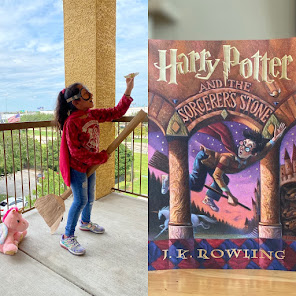
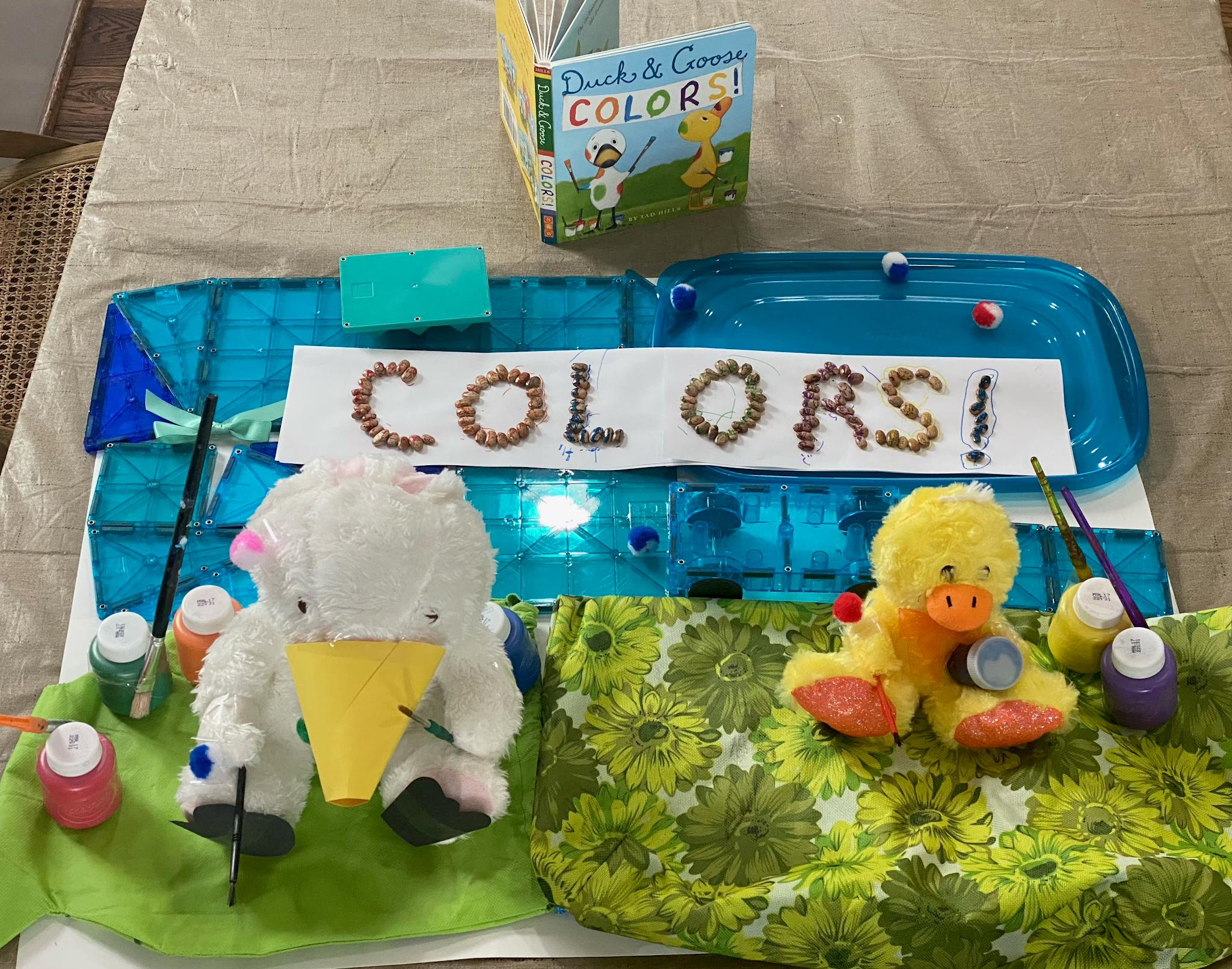
The "unplugged" activity was the same for everyone, Kindergarten through 5th grade. The challenge was to use whatever materials they have around to build a 3 dimensional model of a favorite book cover. I showed the students a few examples, but again, they were encouraged to be as creative as possible. The only rule was no 2D products. I have gotten so many amazing projects back so far. This building project has proven to be a bit more of a popular choice than the coding project. I am not terribly surprised by this because when I told the classes in our meetings that they had a non-computer choice there were many looks of relief.


As I mentioned above, there is a reflection piece to these choices. The prompts vary by grade level a bit, but are all aimed at getting students to reflect on what they learned, the quality of their work, and to think about how they might improve their projects in a second iteration. One of my favorite prompts is the one that asks students to choose 3 adjectives to describe their work. Some responses I have enjoyed from a variety of students include "challenging", "surprising", "awesome", and "breakable".

We have a few weeks left of fully digital learning. Beyond that point there are many unknowns. But whatever may come, I have loved seeing the students' work, and I know that we will find a way to continue making together.